Choosing the worktop installer matters as much as choosing the stone. Here is how to judge one without knowing anything about stone fabrication, and the answers a good specialist should give you.
Request a Free Quote Call 0191 258 1540Expert installation makes a simple material look considered. Poor installation makes a beautiful slab look like a mistake. The trouble is that most people commissioning a worktop have no way of judging which they are about to get, because none of it is visible until the day the stone arrives.
You do not need technical knowledge to work it out. You need five questions and a sense of what a confident answer sounds like.
We are an installer writing this, so read it with that in mind. Our own answers are further down, and you are welcome to hold us to every one of them.
Templating is the process of creating an exact pattern of your worktop layout. Everything downstream depends on it, so this is the single most revealing question you can ask.
A good answer. They template on site, after your base units are installed, levelled and secured. They use digital or laser measuring equipment rather than a tape and a sketch. It takes the best part of an hour on a normal kitchen. They photograph sink, hob and tap positions and confirm them with you while they are there.
What should worry you. Anyone offering to work from your kitchen designer's plan. Anyone quoting fifteen minutes. Anyone who says they will measure on the day of fitting.
This matters more here than on a new build estate. Terraced and semi detached housing across North Shields, Wallsend, Whitley Bay and much of Newcastle is Victorian, Edwardian or interwar. Walls are rarely straight, corners are rarely square and floors have had a century to settle. A template taken from a plan will not fit those rooms, and you will see the gaps at the wall for the next twenty years.
This separates transparent companies from ones that will find extras later.
A good answer. A written, itemised quote covering the site visit and template, all fabrication, the edge profile, sink and hob cut outs, delivery, fitting, sealing where the material needs it, removal of your old worktops and clearing up afterwards. Anything outside that is listed separately so you can see it before you decide.
What should worry you. A single figure described as supply and fit with no breakdown. Templating charged as an extra. Old worktop removal quietly excluded. Vague wording that leaves room for interpretation once a deposit has been paid.
Ask the follow up directly: what could come up that is not in this quote? An honest installer will tell you rather than hedge.
This is the question fewest people ask and the one that tells you most.
A good answer. They cut the stone in their own workshop and fit it with their own employed team. The person you meet in the showroom is connected to the person who arrives at your house.
What should worry you. A supplier who orders the stone in pre cut, or who books a subcontract fitting team. It can work perfectly well. But when something needs putting right, you are left dealing with a company blaming a fabricator who is blaming a fitter.
Ask where the workshop is. A local answer you could drive to is a good sign.
A warranty is an installer telling you how much they trust their own work.
A good answer. A clear workmanship warranty, in writing, separate from the manufacturer's warranty on the material itself. They can tell you what it covers, such as joints opening, cut outs misaligned, edges failing or sealing not done properly. They can also tell you plainly what it excludes, which is normally impact damage and neglect.
What should worry you. No formal warranty at all. A warranty that on inspection excludes almost everything. Any version of the phrase problems are rarely our fault.
Claims are free. Verification is not.
A good answer. They offer recent local customers who have agreed to be contacted, point you to their Google reviews without hesitation, and can show you work in properties similar to yours.
What should worry you. Reluctance. Confidentiality given as the reason. Only website photographs, which could be from any project anywhere in the country.
If you do get references, ask the useful questions rather than the polite ones. Did the quote hold? Did they turn up when they said they would? How does it look now, two years on? Would you use them again?
A good installer welcomes these questions. Confidence in your own process makes them easy to answer, and evasion is its own kind of answer.
Some things should give you pause regardless of how well the five questions went.
Discounts that expire this afternoon, or a quote that will not be honoured next week. A specialist confident in their work does not need urgency to close it. You are making a decision you will live with for twenty years, so take a few days over it.
An outlier sitting far beneath the rest almost always means something has been left out of it. Compare quotes line by line rather than at the bottom, and check the same work is described in each one before drawing any conclusions.
Stone is a material you have to see at full size and in natural light. An operation with no premises you can visit raises fair questions about where the work is actually done and who will be accountable in three years.
Verbal estimates become disputes. Insist on a written, itemised quote and written warranty terms before any deposit changes hands. Anyone reluctant to put their offer on paper is telling you something worth listening to.
It would be poor form to write this without answering it. Traditional Masonry was founded in North Shields in 2004 and is still family run.
Timescale is seven to ten working days from template as standard, fitted in a single day. You can read the full worktop installation process here.
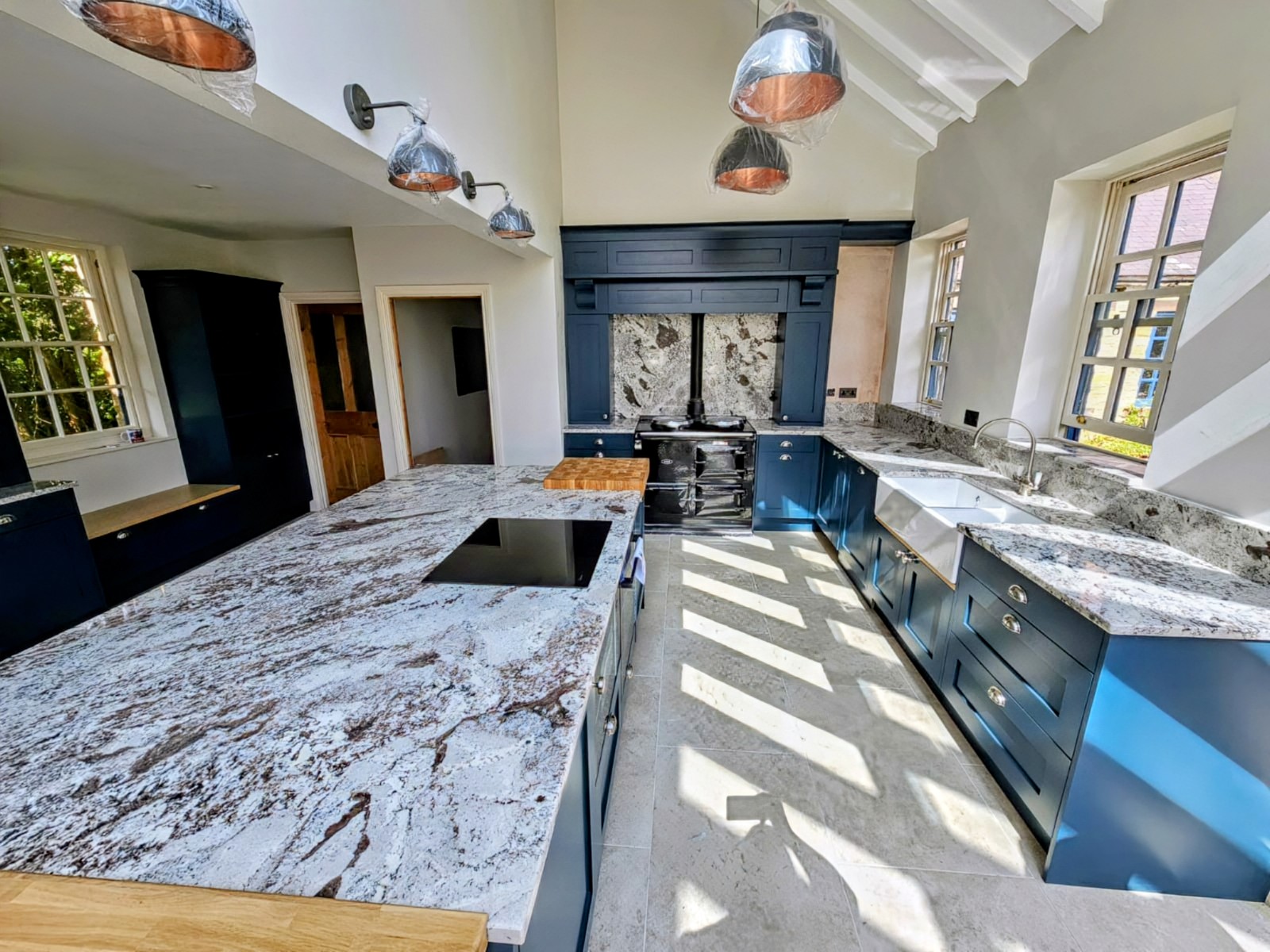
Come and ask us all eight in person if you like. Our showroom is at Unit 6, West Chirton Trading Estate in North Shields, with full-size slabs of granite, quartz, marble and ceramic on display. No appointment needed during opening hours, and no pressure to commit to anything. Call 0191 258 1540 if you would rather talk first.
Ask how and when they template, exactly what is included in the quote, whether they fabricate and fit in house or subcontract, what warranty they give in writing, and whether they can put you in touch with recent customers near you. Those five answers tell you more than any brochure.
Always templated on site, after the base units are fitted and levelled. Working from a kitchen designer's plan cannot account for walls that are not straight or floors that have settled, which is normal in the Victorian and Edwardian housing found across North Tyneside and Newcastle.
Many do, so it is worth asking directly. Subcontracting means the person quoting is not the person fitting, and accountability becomes harder if something needs putting right. We template, fabricate and fit with our own team throughout, and never subcontract.
Around seven to ten working days from template through to fitting, with most installations completed in a single day on site.
A written workmanship warranty from the installer covering the installation itself, such as joints opening, cut outs misaligned or sealing not carried out properly, plus the manufacturer's material warranty passed on to you. Impact damage and neglect are normally excluded.
How we go from first call to fitted worktops in 7 to 10 working days.
Read the processFamily run in North Shields since 2004, with no subcontractors.
Meet the teamKitchens, islands, bathrooms and bar tops across the North East.
View portfolioHow the four main worktop materials stack up for everyday use.
Compare materialsWeighing up the two most popular worktop stones for local kitchens.
Read the guideFull-size slabs in North Shields. Directions and opening hours.
Get directionsOur showroom is at Unit 6, West Chirton Trading Estate, North Shields, with full-size slabs of all four materials. No appointment needed during opening hours. Free site visit and a clear written quote based on your actual kitchen.
Request a Free Quote Call 0191 258 1540