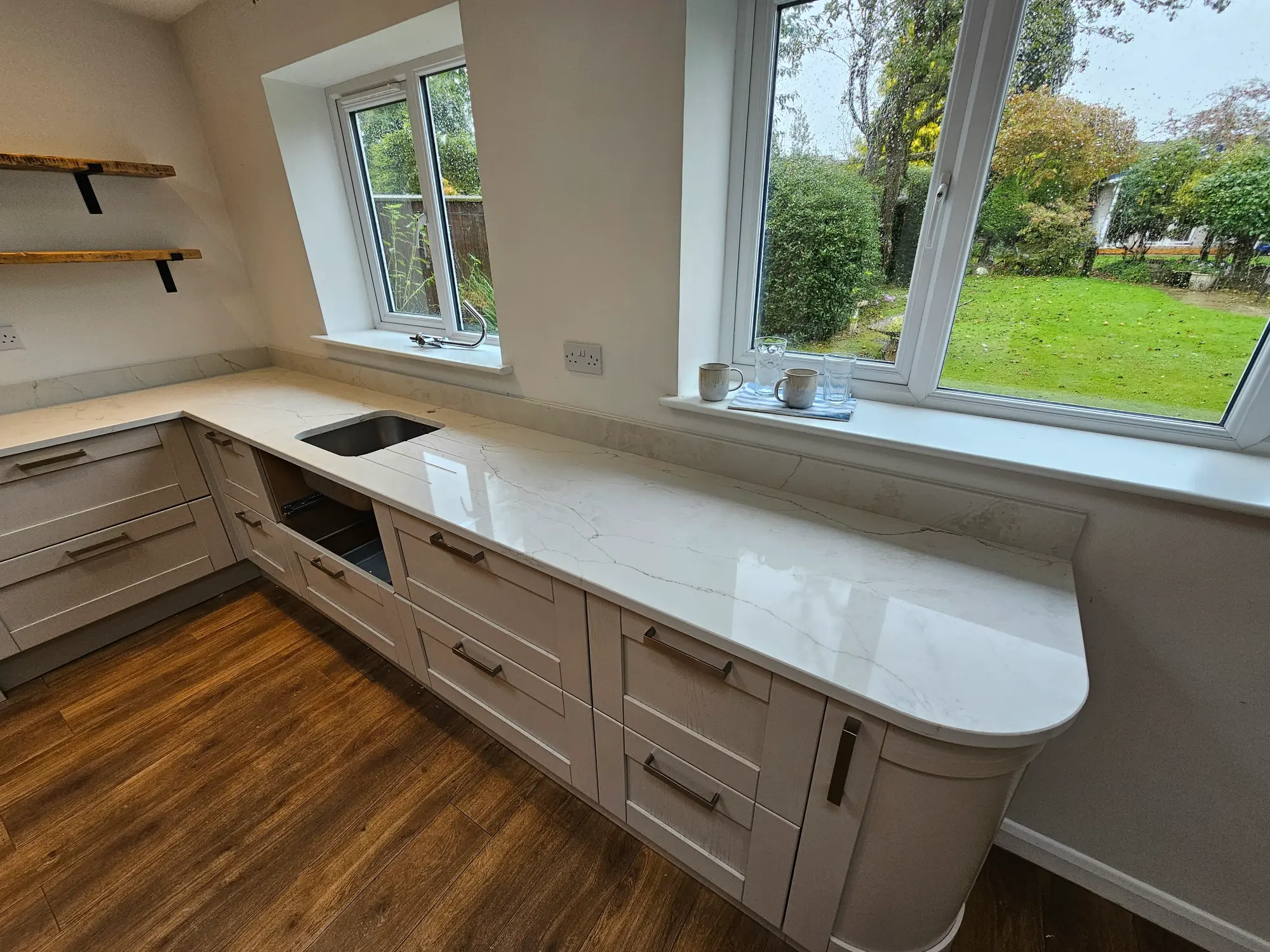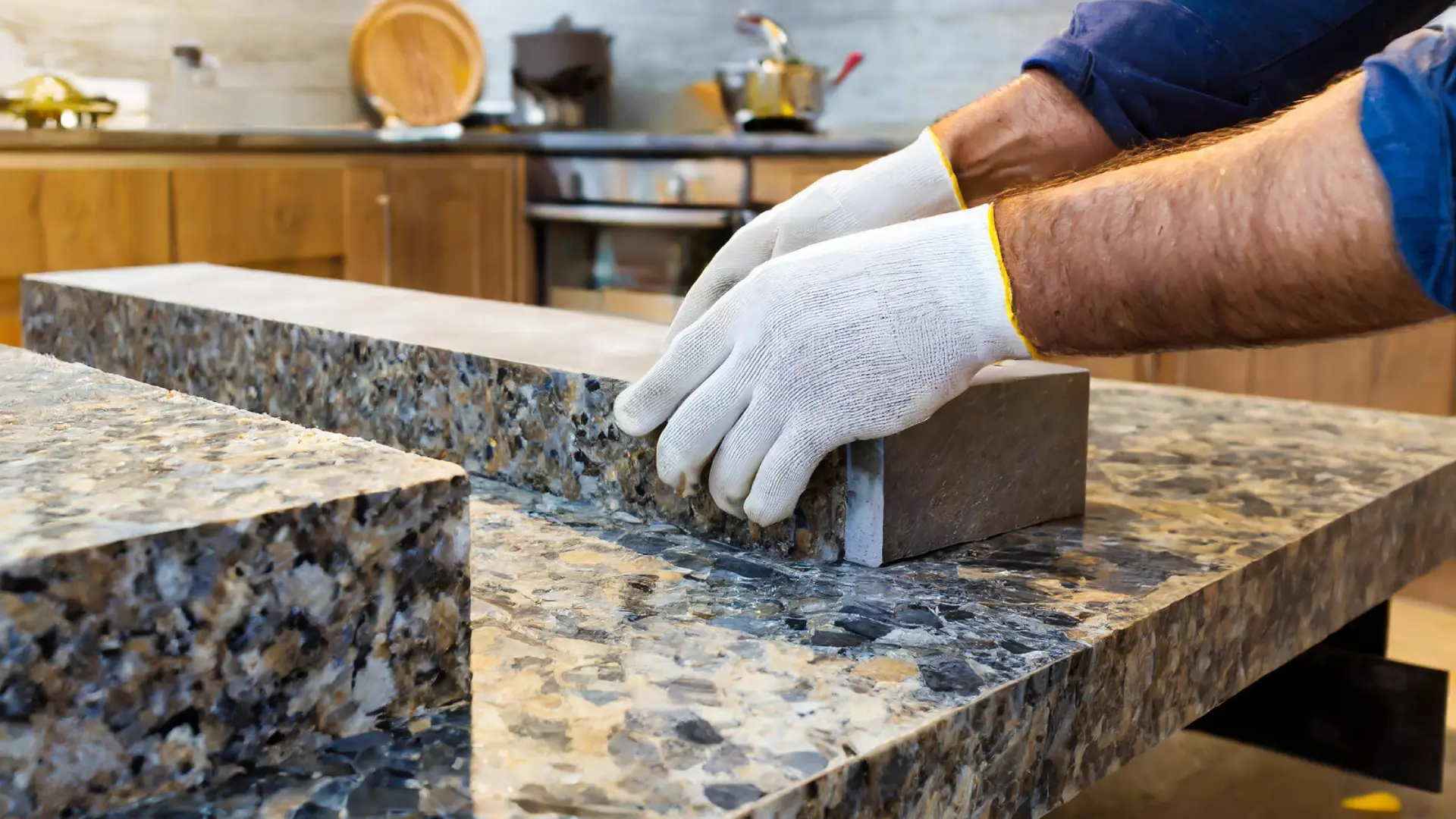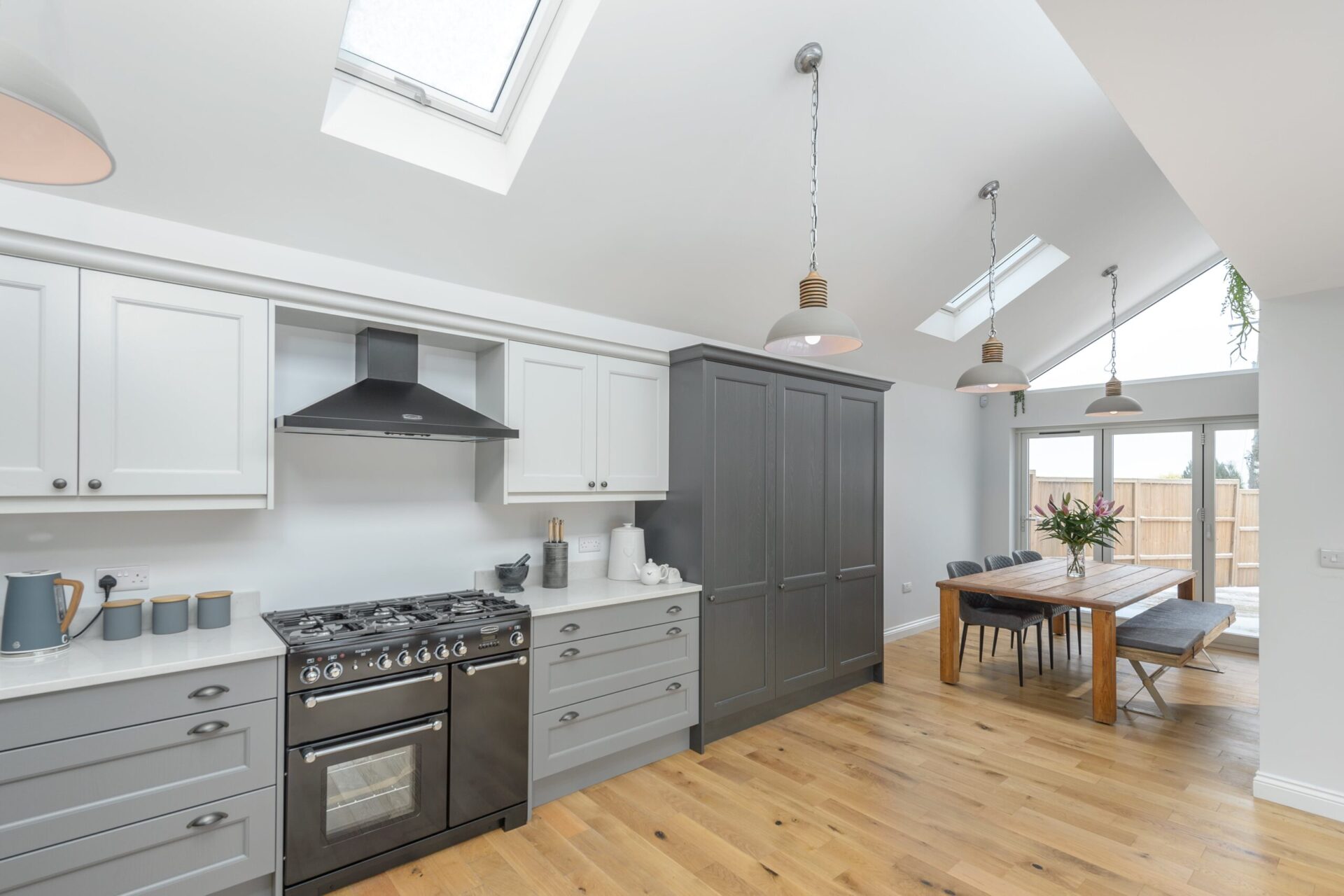
It’s one of the most common things we hear in our North Shields showroom. A homeowner walks in, has a look around at the slabs on display, and says something like: “I know I want stone, I just don’t know which one.” That’s a completely reasonable place to be. Granite, quartz, marble, and ceramic are all genuinely excellent materials — but they’re not interchangeable, and the right choice for a busy family kitchen in Whitley Bay is not necessarily the right choice for a master bathroom vanity in Gosforth, or a kitchen island in a new build in Ponteland. Choosing the wrong stone for your lifestyle isn’t a disaster — stone is stone, and any of our materials will outlast most of the other things in your home — but choosing the right one means you’ll never give it a second thought. It’ll just be there, looking exactly right, doing exactly what you need it to do, for decades. This guide walks you through how we think about material selection at Traditional Masonry Ltd, and how we help homeowners across the North East land on the choice that makes sense for them specifically.
Start with your kitchen, not the stone
This might sound obvious, but the single most common mistake people make when choosing a worktop material is starting with the stone and working backwards. They see a marble kitchen in a magazine, fall in love with it, and then try to make their lifestyle fit the material — rather than the other way around. The better approach is to start with an honest picture of your kitchen and how it works. How many people cook in it regularly? Do you have young children who treat the kitchen as a base of operations for craft projects, homework, and snacks? Do you entertain frequently and need a surface that can handle the aftermath of a dinner party without a second thought? Or is your kitchen a quieter space, used carefully, where a more characterful but higher-maintenance material would thrive? None of these scenarios point automatically to one material and away from another — but they shape the conversation significantly. When you visit our showroom at West Chirton Trading Estate in North Shields, these are the kinds of questions our team will ask before we start pointing at slabs. It’s not nosiness — it’s how we make sure the stone we recommend is one you’ll still love in fifteen years.
What the North East climate actually means for your stone choice
Here’s something most national worktop guides don’t factor in: where you live matters. Not in a dramatic way — stone is stone, and our materials are fitted in homes from Cornwall to Caithness — but the character of North East homes does influence how people use their kitchens and what they need from their surfaces. Many homes across Newcastle, North Tyneside, and Northumberland are older properties — Victorian terraces in Heaton and Jesmond, Edwardian semis across Whitley Bay and Cullercoats, stone-built houses in the Northumberland countryside — where the kitchen is often the warmest, most-used room in the house. These are working kitchens. They need surfaces that can handle genuine daily use, that don’t require anxious maintenance regimes, and that age gracefully rather than showing every mark. For newer builds across the region — the developments around Cramlington, Ponteland, and the wider Tyne Valley — the priorities often shift slightly toward a cleaner, more contemporary aesthetic where the stone is making a deliberate design statement as part of a considered interior scheme. Neither approach is right or wrong. They just point toward different materials, and understanding which category your home falls into is a useful starting point.
Understanding each material honestly
We believe in giving people a fair, honest account of every material we sell — not a sales pitch, but a realistic picture of what living with each stone is actually like day to day. Here’s how we describe each one.
Granite worktops
Granite is the workhorse of the natural stone world, and we mean that as a compliment. If you want a material that will handle almost anything a busy North East household can throw at it — heat from pans, pressure from heavy equipment, the general wear of daily life — granite is extraordinarily capable. It’s one of the hardest natural materials on earth, formed under immense geological pressure over millions of years, and that hardness translates directly into performance in your kitchen. Every piece of granite is unique. The mineral composition that gives each slab its distinctive pattern of flecks, swirls, and tonal variation is unrepeatable — no other kitchen in Newcastle or North Tyneside has precisely the same surface as yours. Granite does require periodic sealing to maintain its resistance to staining, but this is a simple and infrequent task that most homeowners handle themselves without any difficulty. We cover everything you need to know through our aftercare guidance, and with proper care a granite worktop fitted by our team will look exceptional for the lifetime of your home.
Quartz worktops
Quartz is the most popular material we install across the North East, and if you ask us to explain why in a single sentence, it’s this: it performs brilliantly and asks almost nothing of you in return. Engineered from around 90 to 95 percent natural quartz crystals bound with resin, it’s non-porous — which means no sealing, no worrying about red wine or olive oil, and no need to treat it differently from one year to the next. The cleaning routine is exactly what you’d hope for: a damp cloth and a mild detergent. Quartz is also the most versatile material in terms of colour and finish. The range available through our suppliers spans pure whites and soft greys through to deep charcoals, warm taupes, and designs that convincingly replicate the look of marble or concrete. If you have a specific interior scheme in mind for your Newcastle or Northumberland kitchen, there will almost certainly be a quartz that fits it. The one honest caveat with quartz is heat resistance — while it handles normal kitchen conditions well, placing very hot pans directly onto the surface repeatedly over time can affect the resin binder, so trivets are advisable. It’s a small compromise for a material that makes everything else so effortless.
Marble worktops
Marble is the material people dream about, and for good reason. There is simply nothing else that looks quite like it — the depth of a polished marble surface, and the natural veining that moves through each slab in a pattern formed over geological time, create a visual richness that no engineered material can fully replicate. Every marble slab is genuinely one of a kind. The veining in your kitchen in Gosforth or your bathroom in Tynemouth doesn’t exist anywhere else in the world. That exclusivity is part of what marble lovers find so compelling about it. The conversation we always have about marble — and we have it with every customer who considers it, because we believe it’s the right thing to do — is about the material’s characteristics in a working kitchen. Marble is softer than granite and reactive to acidic substances: lemon juice, wine, vinegar, and some cleaning products can cause etching, a dulling of the polished surface that’s difficult to reverse without professional treatment. In a kitchen that sees heavy daily cooking with acidic ingredients, this is a genuine practical consideration. In a kitchen that’s used more gently, or where the homeowner understands the material and is prepared to care for it accordingly, marble is an extraordinary choice. And in a bathroom setting — away from the acid and heat of the kitchen entirely — marble is simply unmatched.
Ceramic and sintered stone worktops
Ceramic and sintered stone — sometimes called porcelain worktops — occupy a fascinating position in the material landscape. Fired at temperatures that exceed those used for natural stone processing, they emerge with a surface that is almost impervious to heat, UV light, scratching, and staining. In purely technical terms, ceramic is the most resilient surface we offer. It’s also available in very large format slabs, which makes it the preferred choice for island worktops and open-plan kitchens where a seamless, uninterrupted expanse of surface is the design intention. The aesthetic range is broad — from surfaces that mimic the look of natural stone to concrete-effect and ultra-matte finishes that suit more industrial or Scandi-influenced interiors. One thing worth knowing is that ceramic requires specialist cutting equipment and genuine expertise to fabricate correctly — it’s a material that will punish inexperience during installation. This is one of the reasons it matters enormously to choose a North East supplier like Traditional Masonry who has the machinery and the trained team to work with it properly, rather than a generalist who has added it to their range without the investment to back it up.
Thinking about the whole house, not just the kitchen
One of the most rewarding conversations we have with homeowners across Newcastle and North Tyneside is when a project expands beyond its original scope. Someone comes in for a kitchen worktop and leaves with a plan that includes a marble bathroom vanity, a stone upstand behind the hob, and a feature wall in the hallway. This isn’t upselling — it’s what happens when people start to see the full possibility of what natural stone can do in a home. When you’re choosing your kitchen worktop material, it’s worth thinking at least briefly about whether you want stone elsewhere in the house, and whether you want it to connect visually with your kitchen choice or contrast with it deliberately. A quartz kitchen with a marble bathroom vanity is a combination we see often and love — the practicality of quartz where it matters most, and the luxury of marble where its character can be fully appreciated. Our team will talk you through how different materials sit alongside each other and help you think about your home as a whole rather than as a series of separate rooms.
The role of colour and light in North East homes
Light is a significant factor in any stone choice, and it’s particularly relevant in the North East where natural light levels vary considerably across the year and across different property types. A pale quartz or light-veined marble that looks luminous in a south-facing Newcastle kitchen with large windows can feel cold and flat in a north-facing Victorian terrace kitchen in Heaton with a single window above the sink. Equally, a dramatic dark granite that looks impossibly sophisticated in a showroom can make a small kitchen feel smaller. When you visit our North Shields showroom, we’d encourage you to bring photographs of your kitchen at different times of day if you can — natural light in the morning, artificial light in the evening. It’s one of the single most useful things you can do to ensure that the material you fall in love with in our showroom is the material you’ll fall in love with again every time you walk into your kitchen at home. Our team will look at those photographs alongside the samples and give you an honest view of how each material is likely to perform in your specific space.
How we help you decide
We don’t operate on a high-pressure showroom model. We’re not a national chain with sales targets and commission structures — we’re a North East business that has been fitting stone worktops in North East homes for over twenty years, and our reputation is built entirely on customers being happy with what they chose. That means we take the selection process seriously. When you visit us at West Chirton Trading Estate in North Shields, our team will spend time with you. We’ll ask about your kitchen, your lifestyle, your budget, and your aesthetic instincts. We’ll show you materials at different price points and be straight with you about the trade-offs between them. If we think a particular stone isn’t right for the way you’ve described using your kitchen, we’ll say so — even if it’s the one you came in wanting. And if the material you’ve fallen in love with genuinely suits your home and your life, we’ll tell you that too and explain exactly why. Take a look at what our customers say on our reviews page — the consistency of the feedback reflects an approach that puts the right outcome for each homeowner above everything else.
Ready to choose your stone?
The best next step is always the same: come and see it in person. Photographs and descriptions — including this one — only go so far. Standing in front of a slab of marble, or running your hand across the surface of a polished granite, or holding a ceramic sample under the light and watching how it changes, tells you something that no screen can replicate. Our showroom is at Unit 6, West Chirton Trading Estate, North Shields, NE29 7TY, with easy access and parking from across Newcastle, North Tyneside, and Northumberland. We’re open Monday to Thursday 8:30am–5pm, Friday 8:30am–4pm, and Saturday 10am–1pm. Call us on 0191 258 1540, email sales@traditional-masonry.co.uk, or book your free consultation and quote online. Come in with questions, leave with clarity — and a surface you’ll genuinely love.