Most people choose the stone and the colour, then get asked about worktop edge profiles and have no idea. Here is what each option actually means, and which one belongs in your kind of house.
Request a Free Quote Call 0191 258 1540It is a small detail that carries a disproportionate amount of the finished look. The edge is the part you lean on, wipe down and see from across the room. Get it right and it quietly suits the house. Get it wrong and it reads as slightly off without anyone quite being able to say why.
It also only matters where it shows. Edges running against a wall or hidden beneath wall units are finished plainly, because nobody will ever see them. What you are really choosing is the front edge, any island returns and the breakfast bar.
We hand finish every profile in our North Shields workshop, so this is written from the machine rather than from a catalogue.
There are more than four, but these are the ones we fit week in week out across Newcastle and North Tyneside. Each does something distinct.
A square edge with the top and bottom softened very slightly. Clean, quiet and suited to almost everything, from a Shaker door in a Whitley Bay semi to a handleless slab in a new build. Comfortable to lean on and more resistant to chipping than a true square edge. If you have no strong feeling either way, this is the right answer.
The top edge rounded into a smooth half curve. Soft, traditional and very comfortable under the forearm. This is the profile that sits most naturally in the Victorian and Edwardian housing that makes up so much of North Shields, Tynemouth and Wallsend. Effectively no corner left to chip.
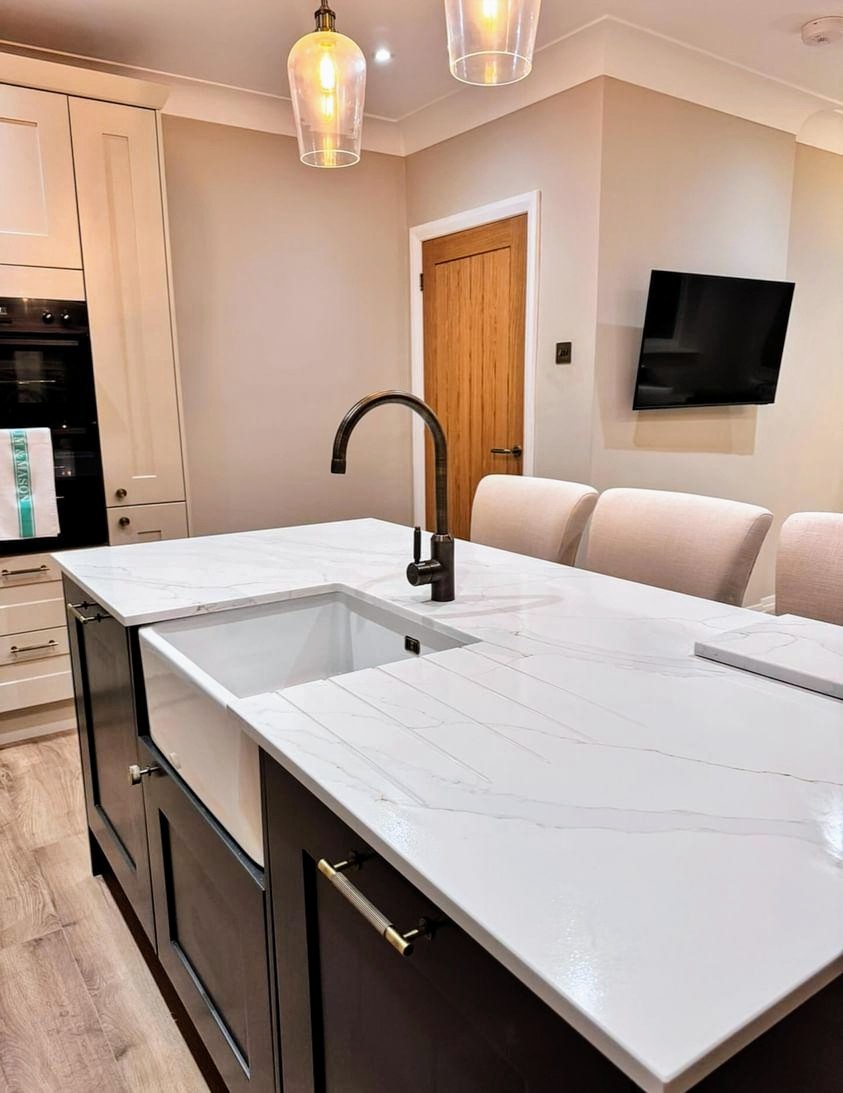
A strip of matching material bonded to the front at forty five degrees, so a standard slab reads as far thicker. You get the presence of solid thick stone without the weight or the structural demands of it. On quartz the joint is close to invisible. The profile that has changed the most kitchens in recent years.
A decorative S curve. Ornamental, period appropriate and unmistakably a choice rather than a default. It looks superb in natural stone in a high end traditional kitchen. Worth knowing that the grooves collect crumbs and want a little more attention when you wipe down.
An edge profile is a tactile decision. In a photograph a bullnose is a slightly blurry line. In your hand it is obviously a different thing entirely.
If you only change the edge in one place, make it the island. A thick mitred profile turns the piece from a worktop into something closer to furniture, and because an island is seen from every angle, that is where the difference registers.
The technique matters as much as the look. On quartz the pattern is consistent through the material, so it matches perfectly around the mitre and the joint all but disappears. On granite it is slightly more visible, because natural stone patterning cannot match exactly across a forty five degree turn. That is not a defect, it is simply what natural stone does, and most people find it reads as character.
Not every profile behaves the same way in every material. This is where a fabricator's opinion is worth more than a brochure.
Pencil edge. The same idea as eased with a tighter radius. Crisper, slightly more architectural and a good fit for modern kitchens where the rest of the detailing is precise.
Square edge. Genuinely square, with only a whisper of a chamfer to stop it chipping in transit. Bold and very modern, though it can feel sharp under the forearm and is the most vulnerable profile to knocks.
Full bullnose. The whole front edge rounded top to bottom into a half cylinder. Distinctly traditional, almost cottage in feel, and effectively chip proof.
Bevelled edge. A forty five degree chamfer machined into the top edge. Angular and deliberately contemporary. Uncommon in this region.
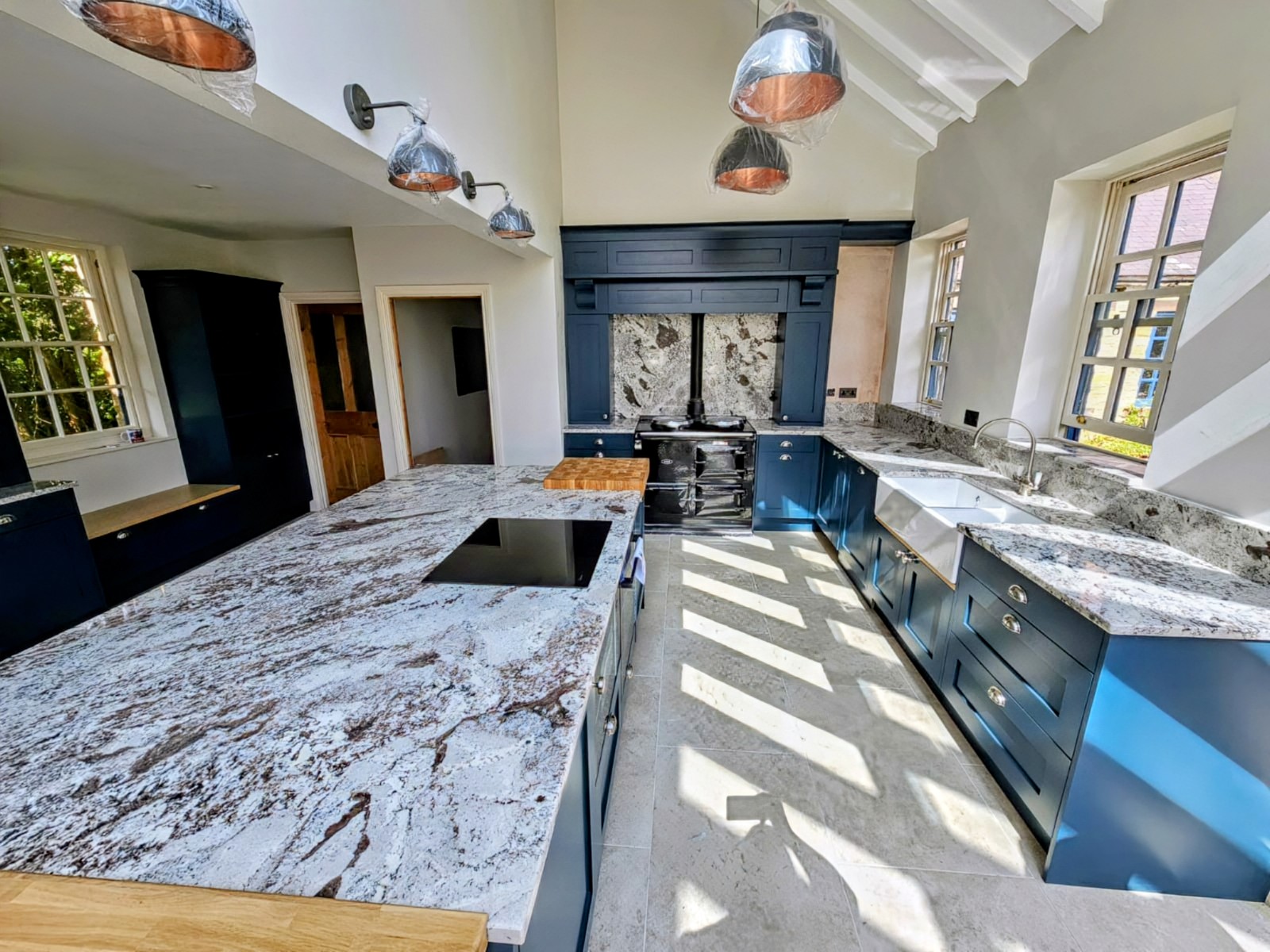

Property type is the single most useful shortcut here. The building will usually tell you what it wants.
You do not need the same profile everywhere either. A mitred thick edge on the island with a standard eased edge on the perimeter runs is a common and sensible combination, and it puts the detail where people actually see it.
The eased edge, a square edge with the top and bottom softened very slightly. It suits almost every kitchen style, is comfortable to lean against and resists chipping better than a true square edge. It is the profile we fit most often across the North East.
A strip of the same material bonded to the front edge at forty five degrees, so a standard slab reads as far thicker than it is. It gives the presence of solid thick stone without the weight or the structural demands of a genuinely thick slab.
A bullnose or full bullnose tends to sit best in Victorian and Edwardian homes. The softer rounded profile complements older joinery, whereas sharp square and bevelled edges can look out of period in a traditional room.
Simple profiles such as eased and pencil, because there are no grooves to trap crumbs. Decorative profiles such as ogee look superb but need a little more attention when you wipe down, which is worth weighing up in a busy family kitchen.
No, and many kitchens do not. A common approach is a thick mitred edge on the island, where it is seen from every angle, with a simple eased edge on the perimeter runs where much of the edge sits under wall units anyway.
Granite, quartz, marble and ceramic compared honestly.
Compare materialsThe cleanest mitre of any material, and hundreds of colours.
View quartzNatural stone that takes a decorative profile beautifully.
View graniteTemplating, fabrication and fitting in 7 to 10 working days.
Read the processIslands, breakfast bars and edge details across the region.
View portfolioHandle every edge profile in person in North Shields.
Get directionsWe keep samples of every edge profile at our North Shields showroom alongside full-size slabs of all four materials. Bring your door sample, lean on a few edges and settle it properly. It takes five minutes.
Request a Free Quote Call 0191 258 1540