Our summers are short, our winters are wet, and our weather changes its mind by the hour. That is brutal on a worktop. Here is why ceramic is the one surface built to take it, and why nothing else really belongs outside.
Plan Your Outdoor Kitchen Call 0191 258 1540Outdoor kitchens have gone from a holiday memory to a genuine fixture of North East homes. A built in BBQ, a pizza oven, a proper prep surface and a sink, all a few steps from the back door. When the sun finally arrives, there is nothing better.
The catch is that a worktop fitted outside in Newcastle, Tynemouth or Morpeth has a much harder life than the same slab indoors. It is rained on for most of the year, frozen through winter, baked by UV on the rare scorcher, and then asked to perform flawlessly the moment you light the grill in July. Get the material wrong and you will be replacing it within a couple of seasons.
After two decades of templating, fabricating and fitting stone across the region, our advice on outdoor surfaces is simple and consistent: ceramic, also known as sintered stone, is the only material we would put outside without hesitation. Here is why, and where the others fall short.
The four materials we work with behave very differently once they leave the protection of an indoor kitchen. This is the honest verdict on each for outdoor use.
| Material | Outdoors? | Why |
|---|---|---|
| Quartz | Avoid | Engineered with resin that yellows and breaks down under UV. Brilliant indoors, but manufacturers void the warranty outdoors for good reason. |
| Marble | Avoid | Porous and soft. It soaks up rain, etches in the weather and suffers in freeze and thaw cycles. A material that rewards careful indoor ownership, not exposure. |
| Granite | With care | Tough and heat tolerant, and some granites do live outside. But it needs sealing, certain colours can fade, and it is heavier to work with. Workable, not ideal. |
| Ceramic | Best choice | UV stable, frost proof, heat proof and non porous. Built to be exposed. This is the surface designed for exactly this job. |
Ceramic, or sintered stone, is made by compacting natural minerals under extreme heat and pressure. The result is a surface with none of the weaknesses that let our climate destroy other materials.
The colour will not fade or yellow no matter how much sun it gets. This is the single biggest reason quartz cannot go outside and ceramic can.
Because it is non porous, it absorbs almost no water. Nothing freezes inside the slab, so it stays sound through every North East winter without cracking.
Set a hot BBQ tray or a pan straight from the grill onto it. Ceramic shrugs off extreme heat without scorching, blistering or discolouring.
Spilled marinade, wine, fat or rainwater simply sits on the surface and wipes away. No sealing, no staining, no bacteria getting a foothold.
Indoors you choose a worktop on looks first. Outdoors you choose on survival first, then looks. Ceramic is the one material that lets you have both.
An outdoor kitchen is a small project that rewards getting the details right at the planning stage. A few things we always raise with clients:
Because every piece is templated on site and cut in our own workshop, we can make the surface fit your structure exactly, including a bespoke shape if the design calls for it.
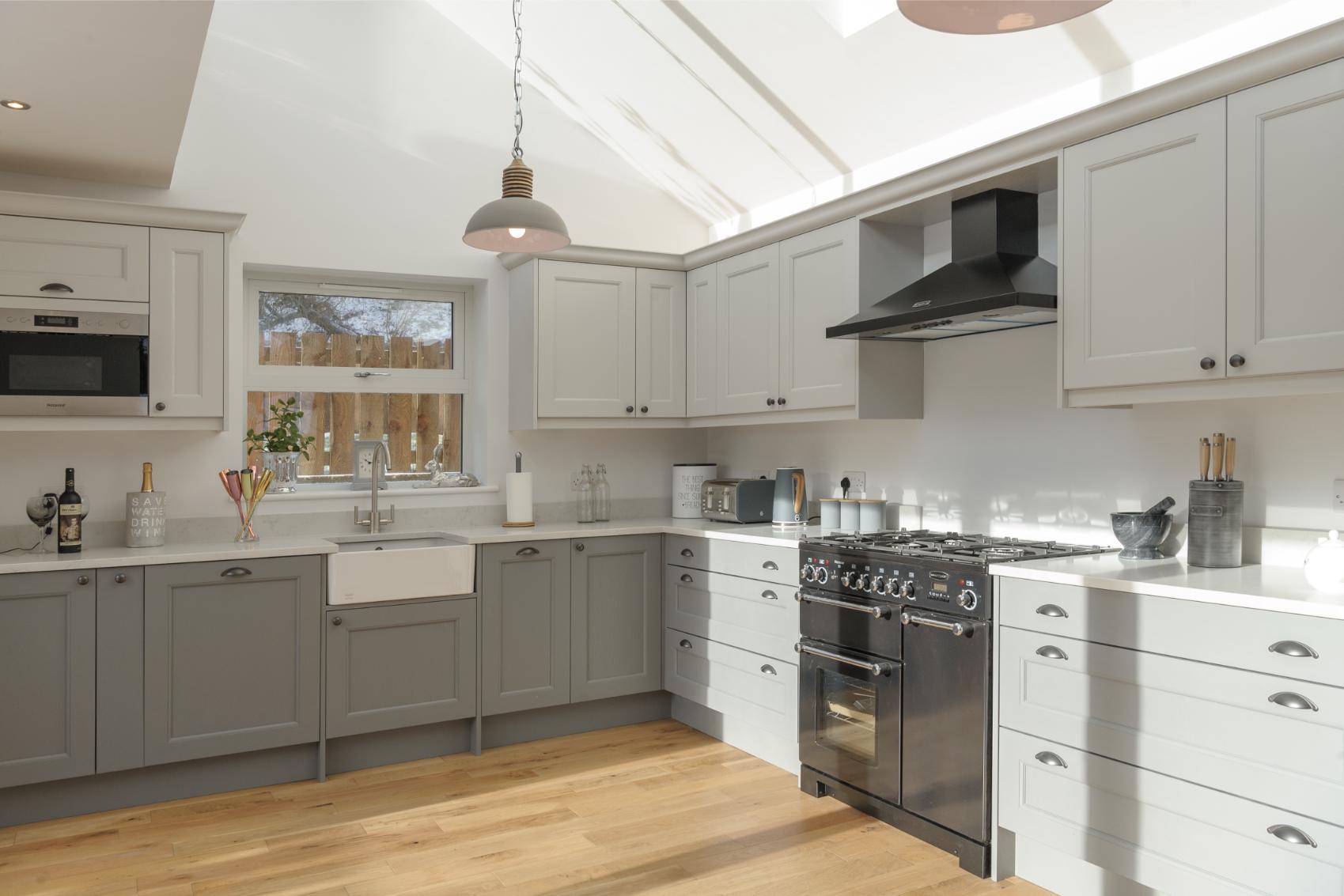
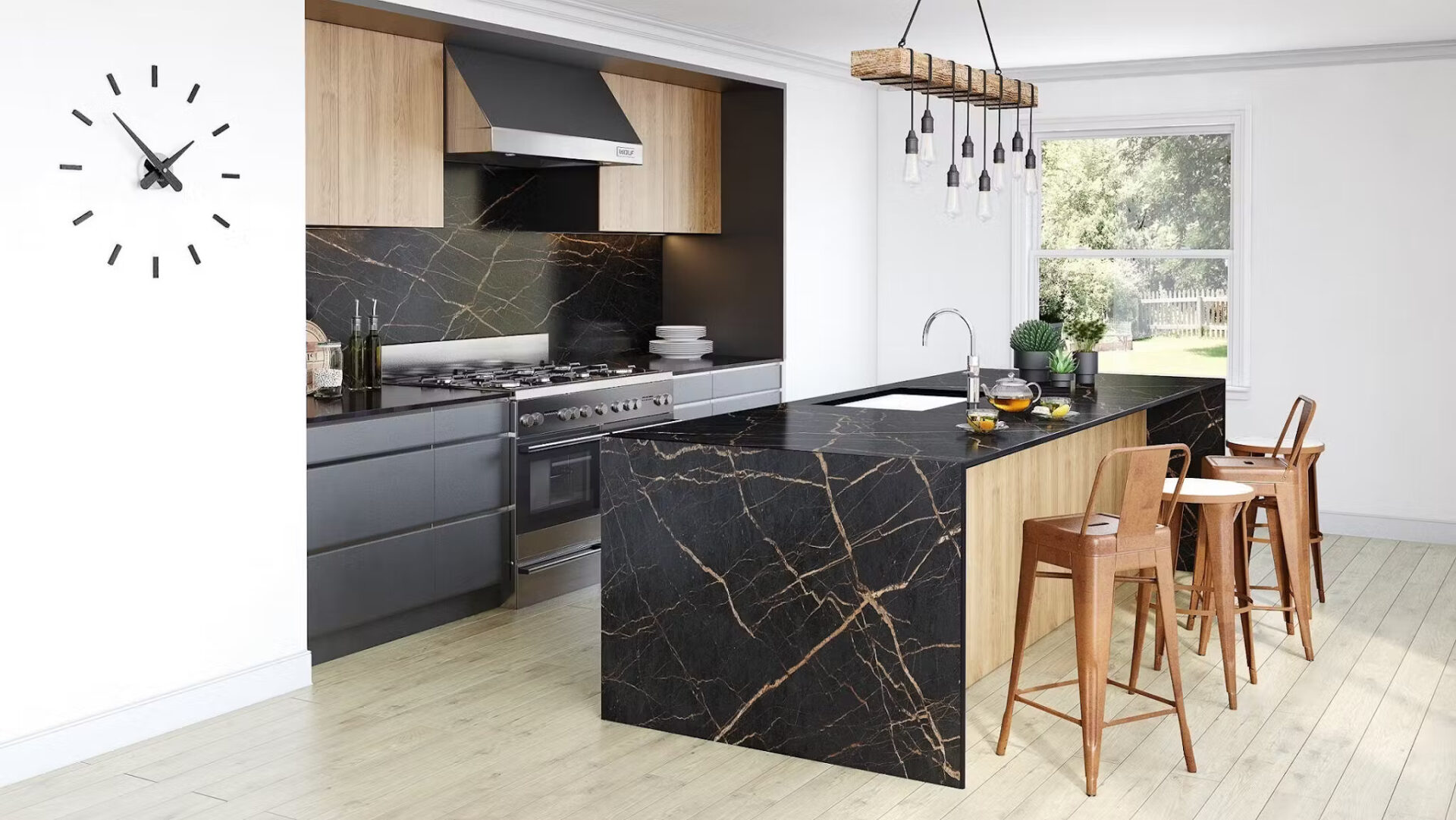
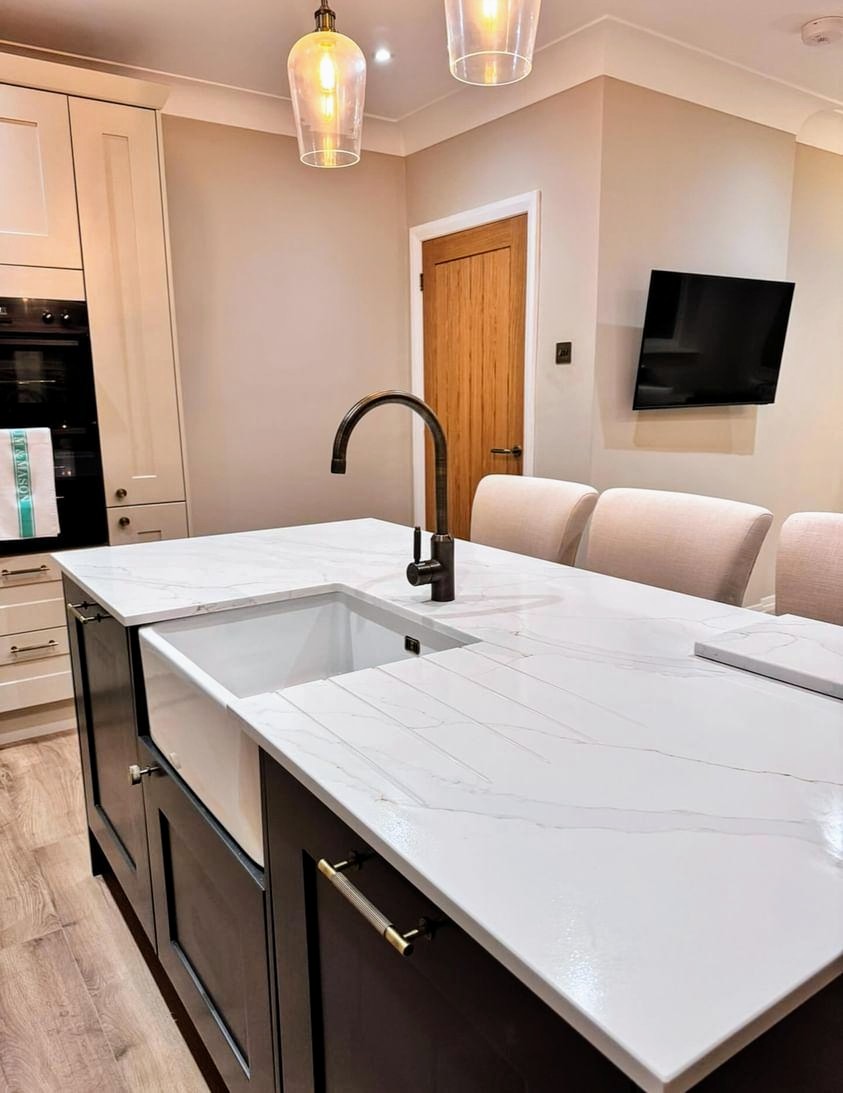
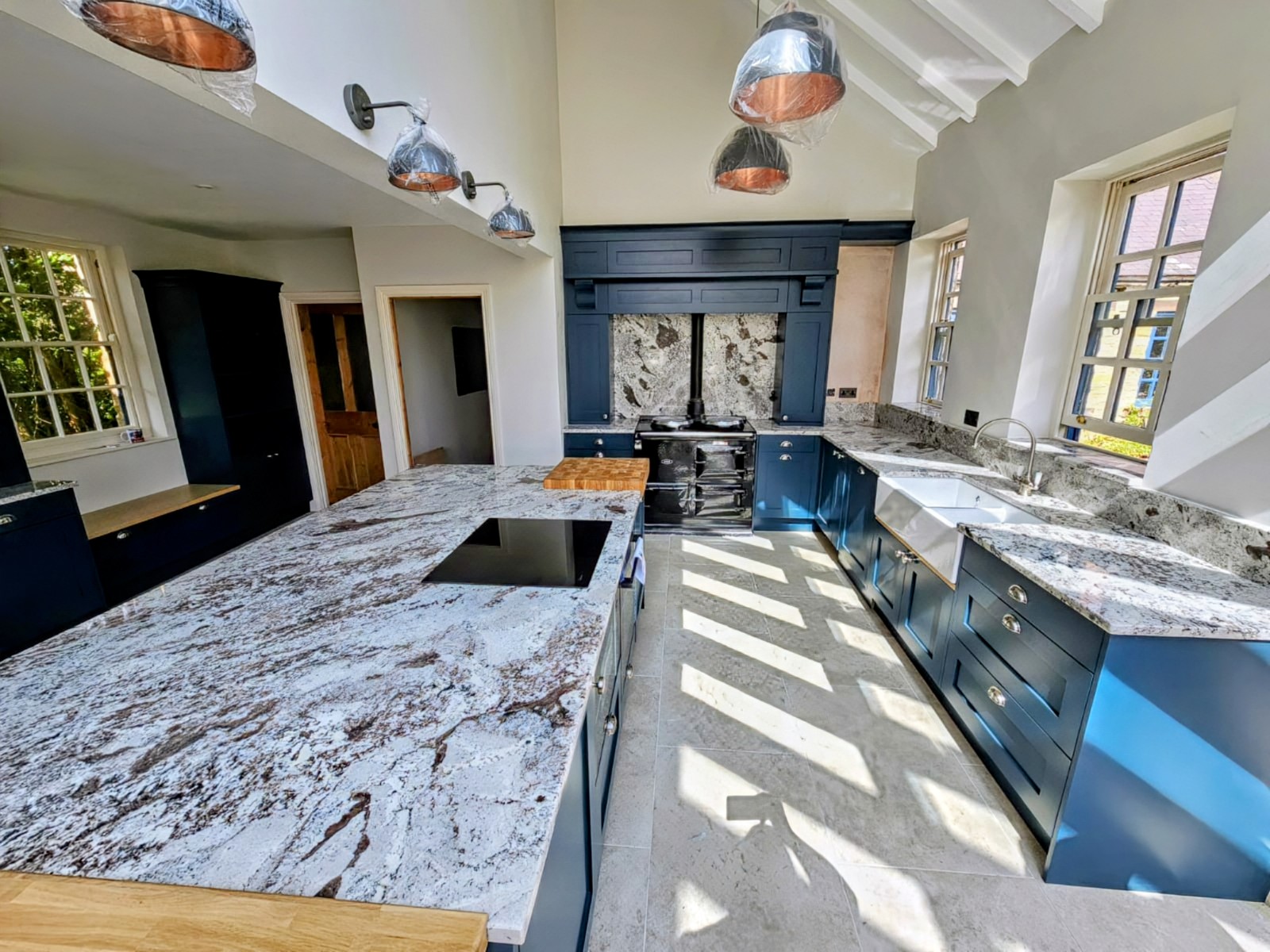
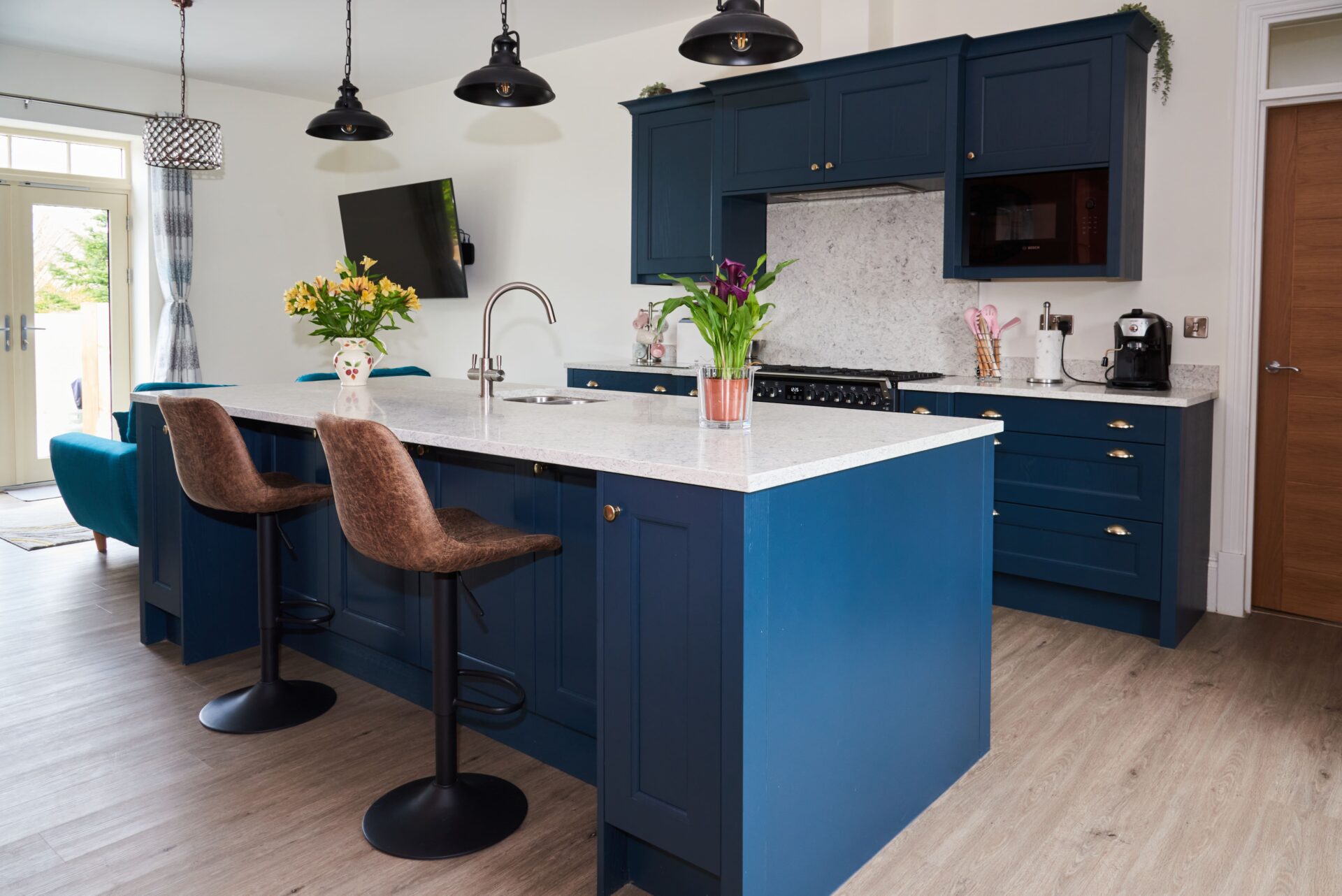
A glimpse of recent surfaces templated, fabricated and fitted by our own team across the North East.
Every year the same thing happens. The first proper warm week arrives, everyone decides they want an outdoor kitchen at once, and lead times stretch. Planning in spring or early summer means your surface is templated, fabricated and fitted while there is still season left to enjoy it.
Our standard turnaround is around 7 to 10 working days from template, and the same team handles every stage. There are no subcontractors involved, so the people who measure your space are the people who fit it. If you are weighing up materials more broadly, our guide on how to choose the right stone worktop for your North East home is a good next read.
No. Quartz is an engineered stone bound with resin, and that resin yellows and degrades under sustained UV exposure. Manufacturers void their warranties on outdoor installations. For an outdoor kitchen in the North East you want ceramic, which is completely UV stable.
Ceramic is non porous, so it absorbs almost no water. That is what protects it through freeze and thaw cycles. Where porous stone soaks up moisture that expands as it freezes and eventually cracks, ceramic stays dimensionally stable through our wettest, coldest winters.
They are closely related. Both are sintered surfaces fired at very high temperatures. Brands such as Dekton are technically sintered stone, while porcelain slabs sit in the same family. For an outdoor kitchen they behave the same way: heat proof, frost proof, UV stable and non porous.
Yes. Ceramic is heat resistant up to very high temperatures and will not scorch, blister or discolour, which makes it ideal next to a built in BBQ, pizza oven or grill.
Yes. We template on site with digital laser equipment, fabricate in our North Shields workshop and fit with our own team across Newcastle, North Tyneside, Northumberland and County Durham. We never subcontract.
The full guide to sintered stone, its finishes and where it works best.
View ceramicWorktops, islands, splashbacks and sink cut outs, templated and fitted by our team.
View kitchensMatch your outdoor kitchen with feature walls and external stone panels.
View claddingHow to match material to your home, your budget and your lifestyle.
Read the guideBar tops, restaurant surfaces and outdoor commercial fit outs across the region.
Read moreHow to keep every surface, indoor or out, looking its best for years.
View aftercareBring your plans or a few rough measurements to our North Shields showroom and see full size ceramic slabs in natural light. We will talk you through the options and give you a clear, honest quote, with no pressure to commit.
Request a Free Quote Call 0191 258 1540