
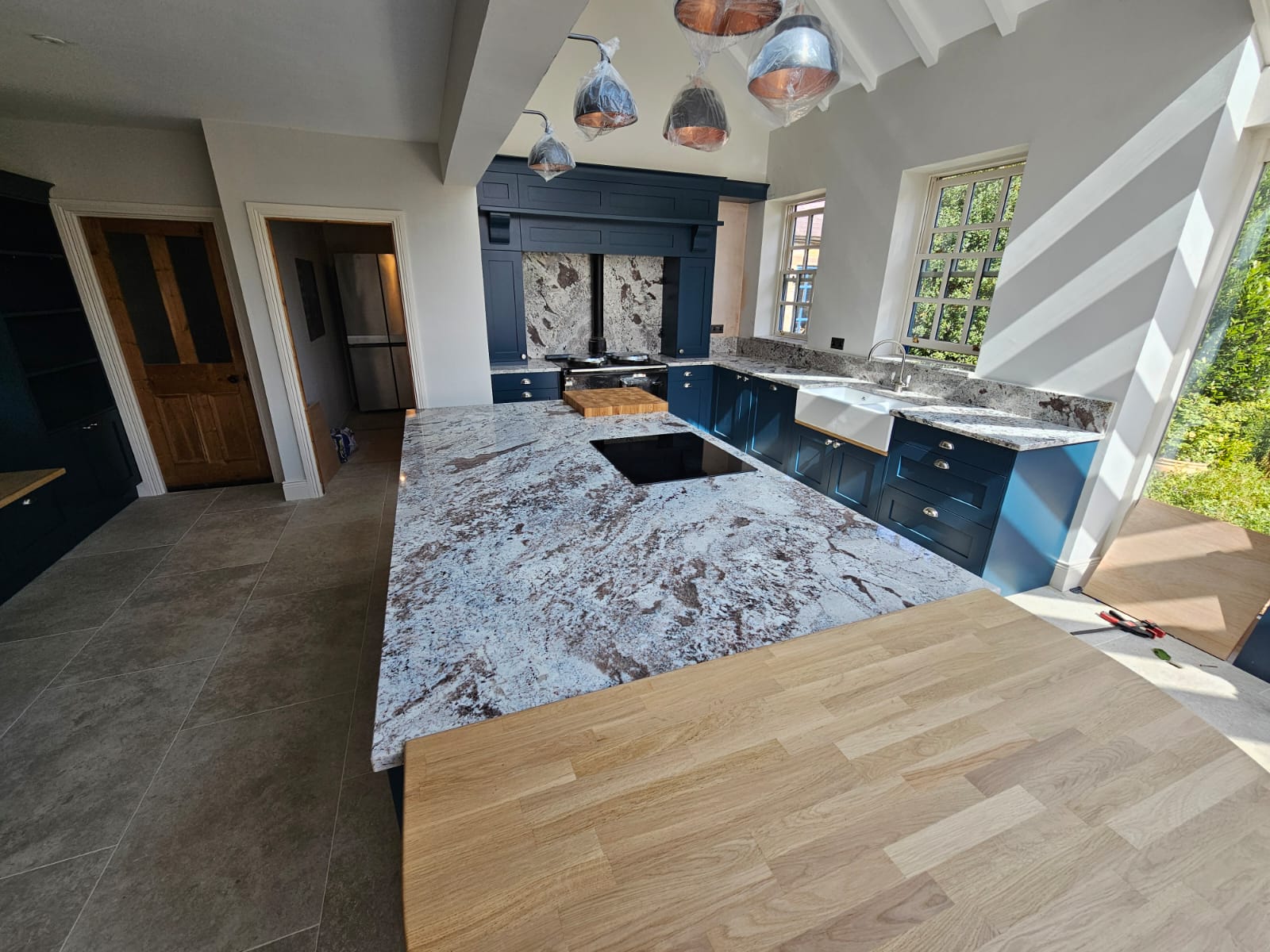
When it comes to quartz vs granite vs marble, selecting the right stone worktop involves more than choosing a colour or finish. Quartz, granite and marble each behave differently in day to day use, and understanding these differences helps homeowners choose a surface that suits both their kitchen and lifestyle.
Quartz vs granite vs marble: how they compare
Quartz worktops are engineered surfaces designed to offer consistency and practicality. Their non porous structure makes them resistant to staining and easy to maintain, which suits kitchens used frequently for cooking and entertaining. Quartz works particularly well in contemporary spaces where uniform colour and clean lines are important.
Granite is a natural stone valued for its strength and durability. Each slab is unique, with variations in pattern and tone that appeal to homeowners looking for character and depth. Granite performs well in high heat environments and suits both modern and traditional kitchens when correctly supplied and installed.
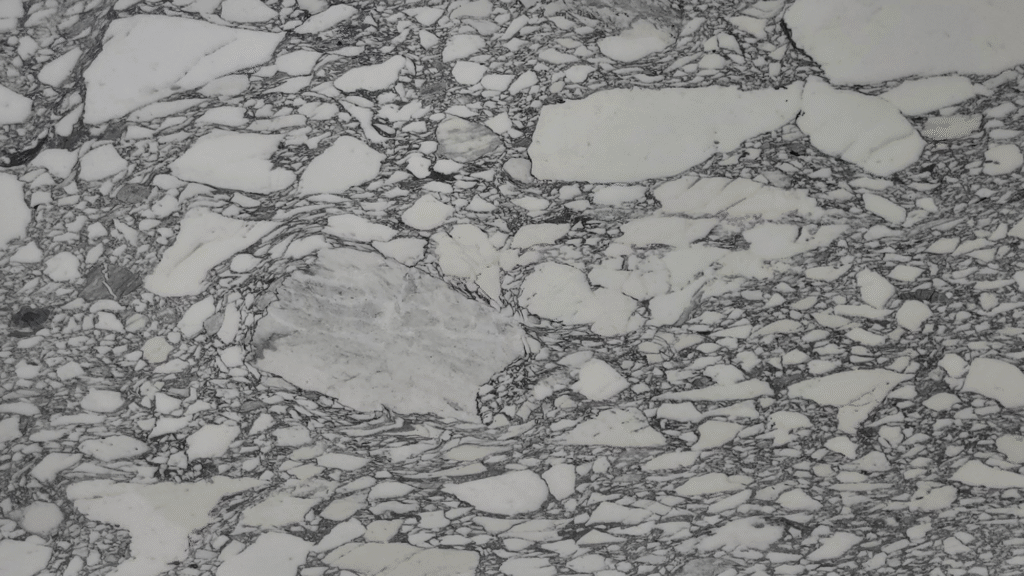
Marble is often chosen for its visual appeal rather than practicality alone. Its distinctive veining and softer appearance make it well suited to period properties, feature islands and areas where design takes priority. Marble requires more care than quartz or granite, but many homeowners accept this in exchange for its appearance.
The decision between these materials should take into account how the kitchen is used, cleaning preferences and the overall style of the property. Professional templating and installation play a significant role in performance, regardless of the material selected.
We supply and fit quartz, granite and marble worktops across the North East, helping homeowners understand the differences and select the most appropriate stone for their kitchen project.
Quartz vs granite vs marble at a glance
| Quartz | Granite | Marble | |
|---|---|---|---|
| Origin | Engineered from crushed quartz and resin | Natural igneous stone | Natural metamorphic stone |
| Look | Consistent colour and pattern | Speckled, every slab unique | Soft veining, every slab unique |
| Sealing | Not needed | Occasional | Regular |
| Heat | Use a trivet | Very good | Good |
| Stain and etch resistance | Excellent | Very good once sealed | Lower, acids can mark it |
Three myths worth clearing up
Quartz is completely maintenance free. It is very low maintenance, but the resin that binds it can be marked by a hot pan placed straight on the surface, so a trivet is still a good habit.
Granite is unhygienic. A properly sealed granite worktop is a dense, easy to clean surface that is perfectly suited to food preparation.
Marble cannot be used in a kitchen. It can, and many people love it there. You simply need to accept that it will develop a gentle patina over time, the same softened look you see on old marble counters in bakeries and delis.
Matching the stone to the room
The best answer in the quartz vs granite vs marble debate often depends on where the stone is going. Busy family kitchens tend to suit quartz or granite. Bathrooms, where there is less cooking and fewer acidic spills, are a lovely place to use marble for vanity tops and shower surrounds. Fireplace hearths and surrounds suit granite and marble, which handle warmth well. Many homes mix materials, for example a quartz kitchen with a marble bathroom.
Three questions to ask yourself
- Do I want every part of the worktop to look the same, or do I like natural variation?
- How much care am I happy to give the surface each year?
- Will the worktop see heavy daily cooking, or is it more of a showpiece?
Your answers will usually point clearly towards one stone. For a deeper look at each, see our quartz, granite and marble worktop pages.
If you would like guidance on quartz vs granite vs marble worktops for your home, contact us to arrange a site visit. We can assess your kitchen layout and recommend the most suitable stone surface.

